Compounding Knowledge – Vol. 1 – Metal tools
This is the first instalment of a series of posts I am writing. The idea is to walk through and learn some of the most important advancements in knowledge that have occurred over the centuries. The full intro to the series and a list of all posts on the subject can be found here.
When I think back to ancient times of people living in caves, and hunting and gathering, I think I have a pretty good grasp on the basic knowledge needed. I’ve watched enough Bear Grylls to know how to start a fire from scratch. Martha Stewart taught me that cooked meat is better than raw. Smashing things with rocks is always a good time and a great way to build things. However, a very important technology comes to mind that I have little knowledge on, which is making metal tools.
Ancient history is typically described in three ages. The stone age, the bronze age, and the iron age.
The Stone age (ie, before tools were made with metals) is estimated to end sometime around 3000 BCE. Then the Bronze age kicked in, and lasted until around 1200 BCE, when the iron age began.
What we know today about making and using metals was developed over thousands of years of experimentation and iteration. It is amazing to think about how learning these techniques and creating more useful tools and other advancements seems to propel technology forward at an exponential rate. We are the beneficiaries of thousands of years of trial, error, and discovery.
Initial discovery
I started my research out by sitting on the my lazy ass and watching videos on the subject. The videos nicely explained how iron or other metals are extracted, and eventually turned into tools, which I will get into in a bit. However, my immediate question that the videos didn’t answer was, how did people figure out how to make metals initially?
We have the mining and smithing of metal down to a science. We know the best methods for doing so and how to utilize by products to make even more things. We know what other compounds to mix metals with the make even more useful metals like steel. But again, how was it figured out in the first place?
In my searching, the best and most logical answer is time. What likely happened is, ancient humans found some shiny rocks laying around and decided to smash them with another rock. Smashing metal with a rock would not shatter it like other rocks, but more likely bend and mold it. An interesting discovery. Presumably, some of the metals ended up in peoples fires, and glowed bright orange. Hitting that with a rock probably taught them that it’s easier to mold the metals when they are hot.
Of course, people would not have found clean pieces of iron just laying around. It would have likely been crude iron ore. So experimentation would have occurred around purifying the ore of other compounds and extracting only the metals. Eventually they’d have a hard time finding iron ore laying on the ground, so likely started digging for it.
So let’s look into the process for finding, mining/processing and smithing metal.
Finding Metal
Bronze age metal (bronze, if that wasn’t obvious) is made up of 10% tin and 90% copper. You don’t just find a chunk of tin laying around, you find crude tin ore, which needs to be processed to turn into tin. More on that in the mining/processing section.
Tin
Tin is produced from tin ore. There are a few types of ores that tin can be extracted from, but the most important is called Cassiterite. Cassiterite is usually found in high temperature hydrothermal veins. Hydrothermal veins are deposits of minerals imbedded in rock structures that aren’t the same material as the rock itself. Usually you find Cassiterite in granite. Cassiterite appears as dark brown or black.

Copper
Copper is one of the few metals that is a naturally occurring mineral which is called native copper. Though, most of the copper we find today occurs in mixed forms with other elements and requires processing, native copper is probably what was used during the bronze age.

Iron
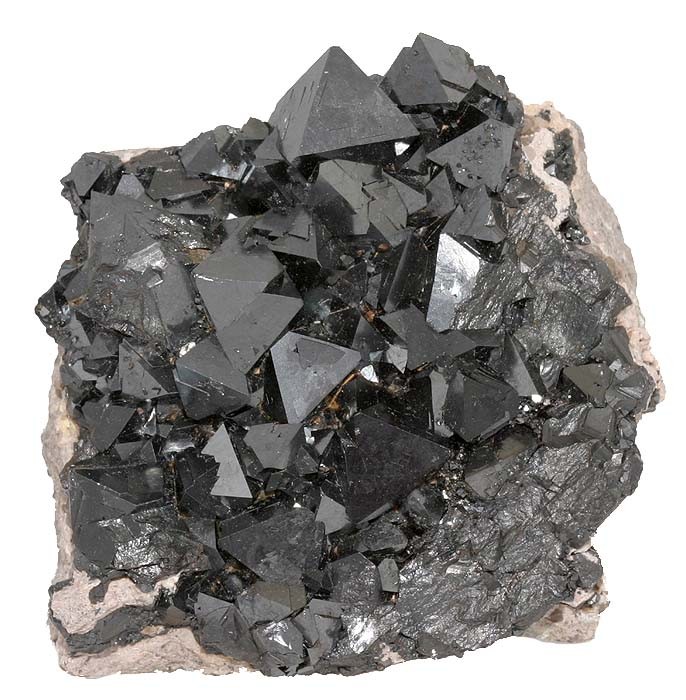
Iron can be found in several minerals. The mineral with the highest iron content is magnetite. Magnetite is the most magnetic mineral on earth. It appears black. You can find magnetite in many places. The tallest mountain in Mauritania is said to be comprised completely of Magnetite. You can also find it on black sand beaches or in fossils. I don’t recommend extracting it, but magnetite is also produced by living organisms (like us) and is found in various sections of our brain.
Mining and Processing
I’ll use iron as the example.
Apparently a lot of the iron found in the middle ages was found in fairly easy to reach areas, meaning not a lot of tunnelling or excavation was required to get to it. However, by the twelfth century, much of those areas were used up (at least in Europe) so tunnelling and excavating was required.
Workers would use tools like pickaxes or other crude tools to smash the rocks. Then buckets or ox or pulleys were used to haul the rocks out of the tunnel. Technology progressed in this area and inventions like the wheelbarrow were introduced which greatly increased productivity.
Flooding of mines was a big problem so crude pump systems were designed. Some of the earlier versions were just dippers on a chain that were powered by an animal on a treadmill, or powered by humans with a crank. Ventilation was also an issue in the mines. At first, workers ventilated the mines simply by flapping their clothes to create wind, but bellows were eventually introduced as well.
After the materials were removed from the mine, a process called smelting was performed which is essentially using heat to separate the different materials in the iron ore to try and get to pure iron.
The process of smelting requires a few things: Charcoal, a furnace, and the iron ore we gathered.
First make some charcoal. You can get charcoal from burning wood. What people did was make a pile of wood, leaving a chimney in the middle. Then they covered that pile with leaves and grass, and stacked wet soil on top of that (so the soil doesn’t leak onto the wood). The pile is lit on fire through the chimney, and then wood is thrown into the chimney, and the chimney is covered once it starts to smoke. The smoke will eventually become blueish/blackish which is when you will know the charcoal is ready.
Furnaces were typically made of clay, and built at the side of blacksmiths workshops. You usually need a bellow or a way to blow in oxygen to help with heating it up to temperature. Once a furnace is made, it needs to be dried out before it can be used. Prior to smelting the iron, the furnace also needs to be preheated.
Fill the furnace up with charcoal, then add the iron ore, then place more charcoal on top of that. The non pure materials (called slag) will start to melt off of the iron, and special holes built into the furnace allow the blacksmith to tap it off. Eventually the purified iron forms in the hearth of the furnace. When it’s ready, the blacksmith breaks the breast wall of the furnace to remove the iron, which can be fairly easily repaired to reuse the furnace. The iron is usually compressed after taking it out of the furnace by smashing it with a hammer. At this point, it is ready to be taken to a forge, where heat is applied and the blacksmith hammers and forges the iron into whatever tool they happen to be making.
Sounds fairly easy right? Doubt it. Apparently even after smelting the iron, pieces of slag still remain, making it difficult to hammer and forge. Techniques would have been mastered over the centuries that improved the purity of the iron that was extracted, as well as reduced wastage.
Well there we have it. An overview of making metal tools. Onwards.